jueves, 12 de enero de 2017

REGISTER

Spring Photo Workshop in Mexico with Kim Weston and Miguel Soler-Roig.    

March 15th- 19th  2017

Please send an email to spainphotoworkshop@gmail.com  to confirm your place in this workshop. 
Then information and details of payment for your tuition will be send to you by email. Please contact the same email 
if you have any problems registering, need another way to pay your tuition or assistance in registration.

Fees

Cost of Workshop is $ 3,000.
Workshop Fees covers tuition, transportation from Manzanillo to photo locations and hotel accommodation. Meals and airfare to and from Mexico are not included.

If you want to book your place send us an email to spainphotoworkshop@gmail.com with your name, address and phone number.


You can also call the following number: +34 91 131 0600, Monday to Friday, between 10:00 am and 7:00 pm Spain time. Note that 50% of the tuition fee is required to secure your reservation. Space is limited to 10 participants only.  

For payments within the United States please contact Gina Weston gina@kimweston.com for bank wire details. We accept checks, money orders, credit cards and bank wires. Please make all payments in US dollars, and make all checks, or money orders to Gina Weston. 
Space is limited to 10 participants only": You can be accompanied by a non photographer person.  Please let us know to arrange accommodations. Extra fee will apply.
Contact spainphotoworkshop@gmail.com for more details.

Withdrawal, Workshop Cancellation and Refund

If you need to withdraw from the workshop, you must inform us no later than 30 days prior to the first day of your workshop, and we will refund your deposit or full tuition, which ever is applicable, less a $100.00 registration fee.
After the cutoff date a refund will only be made if a qualified replacement is found.
If it is necessary for us to cancel a workshop/tutorial, all registered participants will be notified at once, and you will receive a full refund of deposits and fees.
Notification of cancellation due to low enrollment will be made at least 14 days prior to the beginning of class. For this reason we encourage you to purchase refundable airline tickets and consider purchasing trip cancellation insurance. The workshop will not be responsible for any loss on airline tickets or any other loss at all.

Waiver of Liability

The Weston Workshops shall have no responsibility or liability for personal injury to any participant or damage to any participant’s property, or for personal injuries or damage to the property of any other person resulting from the participant’s involvement in the workshop.
The Weston Workshops has the right to cancel any workshop and to alter the time, context, or format of any workshop in the event circumstances require. In the event a workshop is canceled, for any reason the extent of the Workshops’ liability is limited to the return of all fees and deposits paid.
Need more information? Please contact spainphotoworkshop@gmail.com 

jueves, 5 de enero de 2017

NEXT WORKSHOP: MARCH 2017


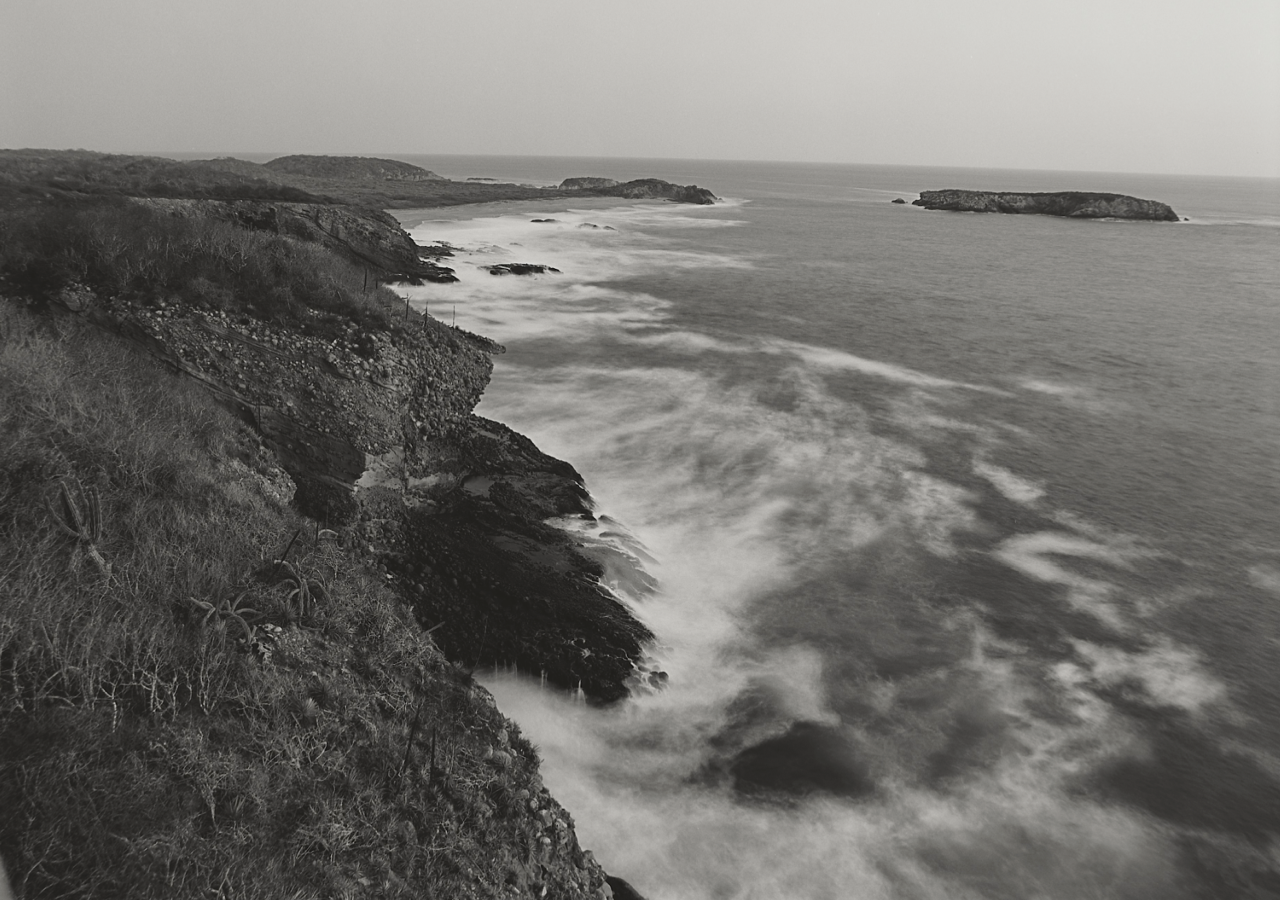
It is a pleasure to announce our next workshop will take place in the Mexican Pacific Cost, from the 15th to the 19th of March with the special collaboration of Kim Weston. We will let you know all the details very soon.


miércoles, 28 de diciembre de 2016

viernes, 23 de enero de 2015

WORKSHOP: APRIL 2015

The Spain Photography Workshop this year takes places in Barcelona and nearby locations in the Costa Brava. 


The workshop theme is The Modernism of Gaudi and the Surrealism of Dali.

It will take place from the 17th  to the 22nd of April


Antoni Gaudí helped the Catalan architecture to worldwide fame and reputation. Gaudí was also an architect and designer with a special ability to synthesise their own tradition and the courage to new technical solutions. He understood to integrate creative and plastic elements in his buildings.

Antoni Gaudí was born in 1852 in the Catalan town of Reus as the son of a craftsmen. In Barcelona, he studied architecture; he concluded his studies in 1878. During this time Catalonia experienced a period of cultural and political rebirth, the Renaixença, at a time of economic and urban growth. A big bourgeoisie patronage wanted not to mix with European currents.

The 1888 World's Fair awarded the generation of the modernisme the main impulses. Gaudí overcame the prevailing historical styles of the eclecticism of the 19th century and developed his own aesthetic with its own distinctive, but difficult to classify style.

Gaudí creation is closely linked to his patron, the industrialist and financier Güell. He has not only a considerable number of orders, but he stocked it with a high prestige. Even at a young age Gaudí was instructed with the construction of the Sagrada Familia, he later devoted exclusively his power to the church.

Gaudí is also a great craftsperson. In collaboration with artists of his time, he designed all the architectural space filled elements: works from forged iron, furniture, ceramics, sculptures, mosaics and stained glass windows. His forms were always organic, curved and into the building.

During the visit, we will visit privately some of the most representatives buildings of Gaudi and we will take amazing pictures.

Watch the amazing video of Casa Batlló 


Batlló house

Batlló house

Batlló house

La Pedrera
Tour virtual La Pedrera

La Pedrera

The Güell park 

Salvador Dali is among the most versatile and prolific artists of the twentieth century. Though chiefly remembered for his painterly output, in the course of his long career he successfully turned to sculpture, printmaking, fashion, advertising, writing, and, perhaps most famously, filmmaking in his collaborations with Luis Bunuel and Alfred Hitchcock. Dali was renowned for his flamboyant personality as much as for his undeniable technical virtuosity. In his early use of organic morphology, his work bears the stamp of fellow Spaniards Pablo Picasso and Joan Miró. His paintings also evince a fascination for Classical and Renaissance art, clearly visible through his hyper-realistic style and religious symbolism of his later work. Dali is most often associated with the Surrealist movement.


We will spend a day in Figueres and a day in Cadaques, the small towns outside Barcelona where Dali was born and lived with his family. Throughout his life, Dali retained his love for Catalan culture, and he depicted the landscape surroundings of the Costa Brava in several key paintings throughout his career. 


We will visit his Theatre-Museum and this will be the main inspiration for our photographs. The amazing place that Dalí wish it to be “… a single block, a labyrinth, a great surrealist object. It will be totally theatrical museum. The people who come to see it will leave with the sensation of having had a theatrical dream.”


The heart of the museum is the building that housed the town's theater when Dalí was a child, where one of the first public exhibitions of young Dalí's art was shown. The old theater was burned during the Spanish Civil War and remained in a state of ruin for decades. In 1960, Dalí and the mayor of Figueres decided to rebuild it as a museum dedicated to the town's most famous son. In 1968, the city council approved the plan, and construction began the following year.[1]:4 The architects were Joaquim de Ros i Ramis and Alexandre Bonaterra. The museum opened on September 28, 1974, with continuing expansion through the mid-1980s. The museum now includes buildings and courtyards adjacent to the old theater building.


The museum displays the single largest and most diverse collection of works by Salvador Dalí, the core of which was from the artist's personal collection. In addition to Dalí paintings from all decades of his career, there are Dalí sculptures, 3-dimensional collages, mechanical devices, and other curiosities from Dalí's imagination. A highlight is a 3-dimensional anamorphic living-room installation with custom furniture that looks like the face of Mae West when viewed from a certain spot.

jueves, 22 de enero de 2015

REGISTER

Spring Photo Workshop in Spain with Kim Weston and Miguel Soler-Roig.    April 17th- April 22nd  2015

Please send an email to spainphotoworkshop@gmail.com  to confirm your place in this workshop. 
Then information and details of payment for your tuition will be send to you by email. Please contact the same email 
if you have any problems registering, need another way to pay your tuition or assistance in registration.

Fees


If you want to book your place send us an email to spainphotoworkshop@gmail.com with your name, address and phone number.


You can also call the following number: +34 91 131 0600, Monday to Friday, between 10:00 am and 7:00 pm Spain time. Note that 50% of the tuition fee is required to secure your reservation. Space is limited to 10 participants only.  

For payments within the United States please contact Gina Weston gina@kimweston.com for bank wire details. We accept checks, money orders, credit cards and bank wires. Please make all payments in US dollars, and make all checks, or money orders to Gina Weston. 
Space is limited to 10 participants only": You can be accompanied by a non photographer person.  Please let us know to arrange accommodations. Extra fee will apply.
Payment outside the US should be made in Euros. Contact spainphotoworkshop@gmail.com for more details.

Withdrawal, Workshop Cancellation and Refund

If you need to withdraw from the workshop, you must inform us no later than 30 days prior to the first day of your workshop, and we will refund your deposit or full tuition, which ever is applicable, less a $100.00 registration fee.
After the cutoff date a refund will only be made if a qualified replacement is found.
If it is necessary for us to cancel a workshop/tutorial, all registered participants will be notified at once, and you will receive a full refund of deposits and fees.
Notification of cancellation due to low enrollment will be made at least 14 days prior to the beginning of class. For this reason we encourage you to purchase refundable airline tickets and consider purchasing trip cancellation insurance. The workshop will not be responsible for any loss on airline tickets or any other loss at all.

Waiver of Liability

The Weston Workshops shall have no responsibility or liability for personal injury to any participant or damage to any participant’s property, or for personal injuries or damage to the property of any other person resulting from the participant’s involvement in the workshop.
The Weston Workshops has the right to cancel any workshop and to alter the time, context, or format of any workshop in the event circumstances require. In the event a workshop is canceled, for any reason the extent of the Workshops’ liability is limited to the return of all fees and deposits paid.
Need more information? Please contact spainphotoworkshop@gmail.com 

ITINERARY

The workshop will start on Friday morning April 17th and will finish on Wednesday April 22nd in the afternoon.

We will finish our workshop visiting the fair ARTS LIBRIS

On April 23rd, (local holiday celebrating Saint George, patron of the Catalan Region) starts the book fair ARTS LIBRIS in Barcelona: 


Will be an opportunity also to view for the first time interesting photobooks. So plan on staying in Barcelona that day if you can. April 23th-26th is an open agenda to hang around. You are welcome to join us, but this will be out of the program.


FIGUERES

DALÍ MUSEUM

jueves, 23 de enero de 2014

WORKSHOP'S SCOPE

This workshop will be hosted by Photographers: Kim Weston and Miguel Soler-Roig.
March 15th- 19th  2017.

This photography workshop is a great way to streamline your learning experience and get the most out of your time and money. 
For more information on the sites that we will we visiting look under the itinerary section.

More activities during this workshop will be announced in the next months.


Fine Art Photography Workshop – Following the Edward Weston Legacy

For more than seventy years, the Weston family has been working with names like Ansel Adams, Ruth Bernhardt, Imogen Cunningham, Minor White, Beaumont Newhall, and many, many more. They all have enjoyed the beauty, the creativity and the technique of traditional analog photography. Kim Weston now continues this tradition. 

Once again, the series of Weston workshops will take place in Spain, along with local photographer Miguel Soler-Roig. 
It is a unique opportunity, since we will be photographing inside private locations and very unique buildings. This Workshop will specialize in fine art nude photography and will take place in an amazing architectural and artistic environments.

Levels of experience

We accept all levels of experience to our workshops. In fact we have all levels attend, beginning to very experienced. Our teaching environment is perfect for beginning students – especially beginning nude photographers. The environment is private and the workshop will be structured with small groups to work in. The only requirement is that you know how to use your camera. 

Instruction

Kim Weston and Miguel Soler-Roig will be your private instructors during this workshop and will work with each photographer in the group. Some of the topics that will be covered are:
  • Composition
  • Lighting
  • How to work with Models
  • Critique of photographs (done on daily basis)
    Critiquing your work is one of the most powerful learning tools that we know of, it enables you to see your work, get feedback on it and then improve on it if needed
  • Preconceived Ideas
  • Storytelling 
  • Expectations
  • Sharing your Work
  • Working within a group

Models

We work with very experienced models during our Workshop. They are skilled in collaborating with the novice to the most experienced photographers.

Kim Weston working with a model


What do you get?
  • 4 full days of photographing experienced nude figure models
  • Experts instruction
  • Amazing landscape and architectural locations (outdoors and indoors)
  • Experienced models (signed model release included)
  • Camaraderie with like minded professionals and participants
  • Networking for future communications
  • Great culinary experience in Mexico
  • 4 nights accommodation 

Levels

This workshop is open to all levels of photographers the only requirement is for you to know how to operate your camera.

Film & Digital

We accept all types of cameras in our workshops, film and digital.

Miguel Soler-Roig working with a model


INSTRUCTORS

Kim has been a fine art nude photographer for over 30 years. He is a third-generation member of one of the most important and creative families in photography. Kim Weston’s photographic vision has long been influenced by the work of his grandfather Edward Weston. 


Education

He learned his craft assisting his father Cole in the darkroom making gallery prints from his grandfather Edward’s original negatives. Kim also worked for many years as an assistant to his uncle Brett, whose bold, abstract photographs rank as some of the finest example.

Cameras

Kim Weston’s first camera was a Rolleiflex, as he got older he photographed with a 4×5 Linhof ( a gift from his uncle Brett), then he switched to a 8×10 Calumet, and now uses an 8×10 Arca Swiss. Lately, Kim has been photographing with a medium format camera, a Mamiya 67 that he inherited from his father Cole Weston.

Format

His main body of work consists of silver gelatin contact prints made from 6×7 (56mm x 69mm), 4×5 and 8×10 negatives. In addition to the 8×10 format he prints in 11×14 and 16×20 sizes. He also prints in Platinum and lately he has added paint to his photographs.

Lifestyle

Kim and his wife, Gina, live at Wildcat Hill, the former home of Edward Weston where they specialize in teaching several unique photography workshops throughout the year.
Kim is an educator and a mentor to young photographers. The Weston Scholarship Fund was established in 2004 to support high school and college students studying fine art photography in Monterey County.


Some of Kim's work:


Go to his website http://www.kimweston.com/

Miguel Soler-Roig (Barcelona, 1961). In his multiple journeys through different countries, he has been in contact with different cultures, adding to his cosmopolitan and adventurous career a worldly knowledge and refined lifestyle, transmitting such qualities in all his works.


As a student at the School of Art in Basel, Switzerland he cultivated a sharper vision towards life thanks to his continuous visits to museums, exhibitions, artist studios and fairs. Later on, during his higher education at Rhode Island School of Design in Providence (USA) and in his early career in New York, he enhanced his enthusiasm for the arts as an inner necessity. On his return to Spain he continues studies in photography, and completes an European Master on Fine Art Photography at IED Madrid, and several professional photography workshops organized by PhotoEspaña.

Today as an artist, photography is his main art feature, weaving in him natural instincts and deeper feelings. He lives the moments while taking photographs, but as he himself confirmes, sometimes portrays what he wants to live. On the other hand, he is very active in the circuits of contemporary art, workshops, conferences (Photoespaña, Arles, Fotofest), exhibitions coordination and cultural management.


Some of the most prominent spaces where he has shown his work are: RISD Museum of Art, Providence, American Institute of Graphic Arts, New York; Schule für Gestaltung, Basel; PhotoEspaña festival, Madrid; IVAM Museum, Valencia; Venice Arsenale; Reial Cercle Artistic, Barcelona; Fundación Luis Carulla, Museu Vida Rural, Tarragona; Casa degli Italiani, Barcelona; Fundación Valentín de Madariaga, Sevilla and Centro Cultural de Jesús, Ibiza.

Main exhibitions: Solo Show in Being3 Gallery, Beijing; Paris Photo 2016. J.P. Morgan Chase Collection. "Pictures in pictures" curated by Lisa Erf; Madrid Photo; Copenhagen Photo Festival; Antonio Saura Foundation, Cuenca; Lisbon Art Fair; Galeria Alejandro Sales, Barcelona; JustMad Art Fair, Madrid; ”Mutants Books” Casa Encendida, Madrid; Gallery Blanca Berlín, Madrid; Arte Laguna, Venice Arsenale; ABSOLUT Portfolio’s Show, Photo España; PINTA, New York; Fotofest, Houston; Fotofever, Paris; Society for Photographic Education, Cleveland, Ohio; Matadero, Madrid; Lianzhou Foto Festival, China; Arts Libris, Barcelona; Segovia Foto Festival; Mondo Galeria, Ibiza; Photo London; Barbara Davis Gallery, Houston; Being3 Gallery, Hudson, NY and Zona Maco Foto, Mexico. 

In recent months he has traveled to Arizona, Utah and Ethiopia to complete his current photography projects.


Some of Miguel's work:


Go to his website http://www.soler-roig.es/

PLACES

CAMPO DE CRIPTANA
Campo de Criptana is a municipality and town in the province of Ciudad Real in the autonomous community of Castilla-La Mancha. It is found in the region known as La Mancha.
The area surrounding Campo de Criptana has been inhabited since prehistoric times. Prehistoric implements of hunting, gathering, and agriculture have been found in various locations, as have ceramics, particularly from the Bronze Age. From historic times, the most plentiful remnants have been Ibero-Roman.


Windmills
"At this point they caught sight of thirty or forty windmills which were standing on the plain..." Thus begins chapter VIII of Don Quixote. In Cervantes' time windmills were quite common. This view is undoubtedly the characteristic landscape of Campo de Criptana, presenting its silhouette from the Sierra de los Molinos and the Cerro de la Paz. A 19th century land registry drawn up at the behest of the Marqués de la Ensenada shows 34 windmills in existence at that time, each clearly marked with the name of the mill and that of its owner. Through archaeological remnants, we know that they had once been far more numerous.

Today, ten windmills can be seen from afar, with their original structure and machinery preserved. Visitors can tour the inside of the mills and listen to a presentation about their function. Other mills have been converted into museums: the Inca Garcilaso is a museum celebrating the working of the land, the Pilón is a museum of wine, the Quimera is dedicated to Vicente Huidobro, the Culebro to the actress Sara Montiel, and the Lagarto to poetry. The Poyatos windmill houses the Office of Tourism. Every Saturday one of the restored mills is put into operation. In 1978, the entire group of windmills was declared a Monument of Historical-Artistic Interest, which today is referred to as a Cultural Heritage Site.

GRANADA AND THE ALHAMBRA
Granada is a city and the capital of the province of Granada, in the autonomous community of Andalusia, Spain. Granada is located at the foot of the Sierra Nevada mountains, at the confluence of four rivers, the Beiro, the Darro, the Genil and the Monachil. It sits at an elevation of 738 metres above sea level, yet is only one hour by car from the Mediterranean coast, the Costa Tropical. Nearby is the Sierra Nevada Ski Station, where the FIS Alpine World Ski Championships 1996 were held.


The Alhambra, a Moorish citadel and palace, is in Granada. It is the most renowned building of the Andalusian historical legacy with its many cultural attractions that make Granada a popular destination among the touristic cities of Spain. The Almohad influence on architecture is preserved in the area of the city called the Albaicín with its fine examples of Moorish and Morisco construction. Granada is also well-known within Spain for the prestigious University of Granada which has about 80,000 students spread over five different campuses in the city. The pomegranate (in Spanish, granada) is the heraldic device of Granada.


RONDA
Ronda is a city in the Spanish province of Málaga. After the disintegration of the caliphate of Córdoba, Ronda became the capital of a small kingdom ruled by the Berber Banu Ifran, the taifa of Ronda. During this period Ronda received most of its Islamic architectural heritage. In 1065 Ronda was conquered by the taifa of Seville led by Abbad II al-Mu'tadid. Both the poet Salih ben Sharif al-Rundi (1204–1285) and the Sufischolar Ibn Abbad al-Rundi (1333–1390) were born in Ronda.
The Islamic domination of Ronda ended in 1485, when it was conquered by the Marquis of Cádiz after a brief siege. Subsequently, most of the city's old edifices were renewed or adapted to Christian roles, while numerous others were built in newly created quarters such as Mercadillo and San Francisco. The Real Maestranza de Caballería de Ronda was founded in the town in 1572, with military finalities.


TARIFA
Tarifa is a small town in the province of Cádiz, Andalusia, on the southernmost coast of Spain. The town is located on the Costa de la Luz ("coast of light") and across the Strait of Gibraltar facing Morocco.


After the Islamic conquest of southern Spain, the city was fortified starting from the 10th century. Later Tarifa was held by the taifa of Algeciras (1031) and by that of Seville (1057), and subsequently by the Almoravids. After the latter's fall, it lived a short period under another taifa of Algeciras (1231), until becoming part of the Kingdom of Granada. In 1292 it was conquered by Sancho IV of Castile, and two years later it resisted a siege by North African Islamic troops. The town resisted another siege in 1340 from Moroccan troops, eventually leading to the Battle of Río Salado.


JEREZ DE LA FRONTERA
Jerez de la Frontera is a municipality in the province of Cádiz in the autonomous community of Andalusia, (Spanish: Andalucía) in southwestern Spain, situated midway between the sea and the mountains. As of 2013, the city, the largest in the province, had 215,180 inhabitants; it is the fifth largest in Andalusia.

In 1231 the Battle of Jerez took place within the town's vicinity, in which the Christian troops under the command of Álvaro Pérez de Castro, lord of the House of Castro and grandson of Alfonso VII, king of Castile and León, defeated the troops of the Emir Ibn Hud, despite the numerical superiority of the latter. The city was conquered by Castile in 1264. The Discovery of America and the conquest of Granada, in 1492, made Jerez one of the most prosperous cities of Andalusia through trade and its proximity to the ports of Seville and Cádiz. Despite the social, economic and political decadence that occurred in the seventeenth century, towards the end of the Habsburg rule, the city managed to maintain a reasonable pace of development, becoming world wide famous for its wine industry.


SEVILLE
Seville was founded as the Roman city of Hispalis, and was known as Ishbiliya[1] (Arabic:إشبيلية) after the Muslim conquest in 712. During the Muslim rule in Spain, Seville came under the jurisdiction of the Caliphate of Córdoba before becoming the independent Taifa of Seville; later it was ruled by the Muslim Almoravids and the Almohads until finally being incorporated into the Christian Kingdom of Castile under Ferdinand III in 1248.[2] After the discovery of the Americas, Seville became one of the economic centres of the Spanish Empire


OTHER PLACES VISITED


TOLEDO


TRUJILLO 


CARMONA
BELMONTE